Build Ponds With AI
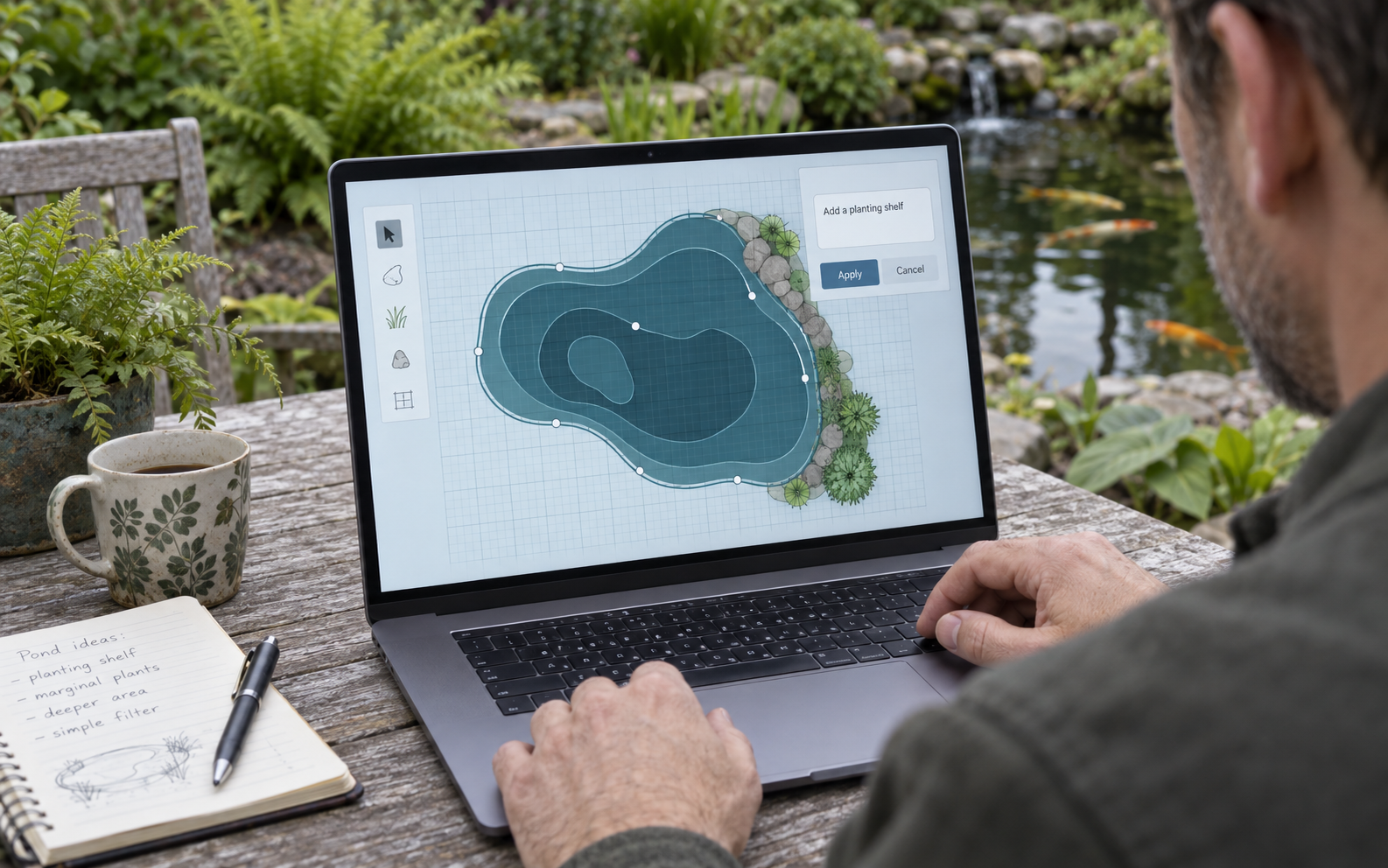
Ask PondTools to shape a custom pond or change an existing design. Review the proposed outlines before you apply them, then keep editing in the planner.
Draw and edit right in your browser.
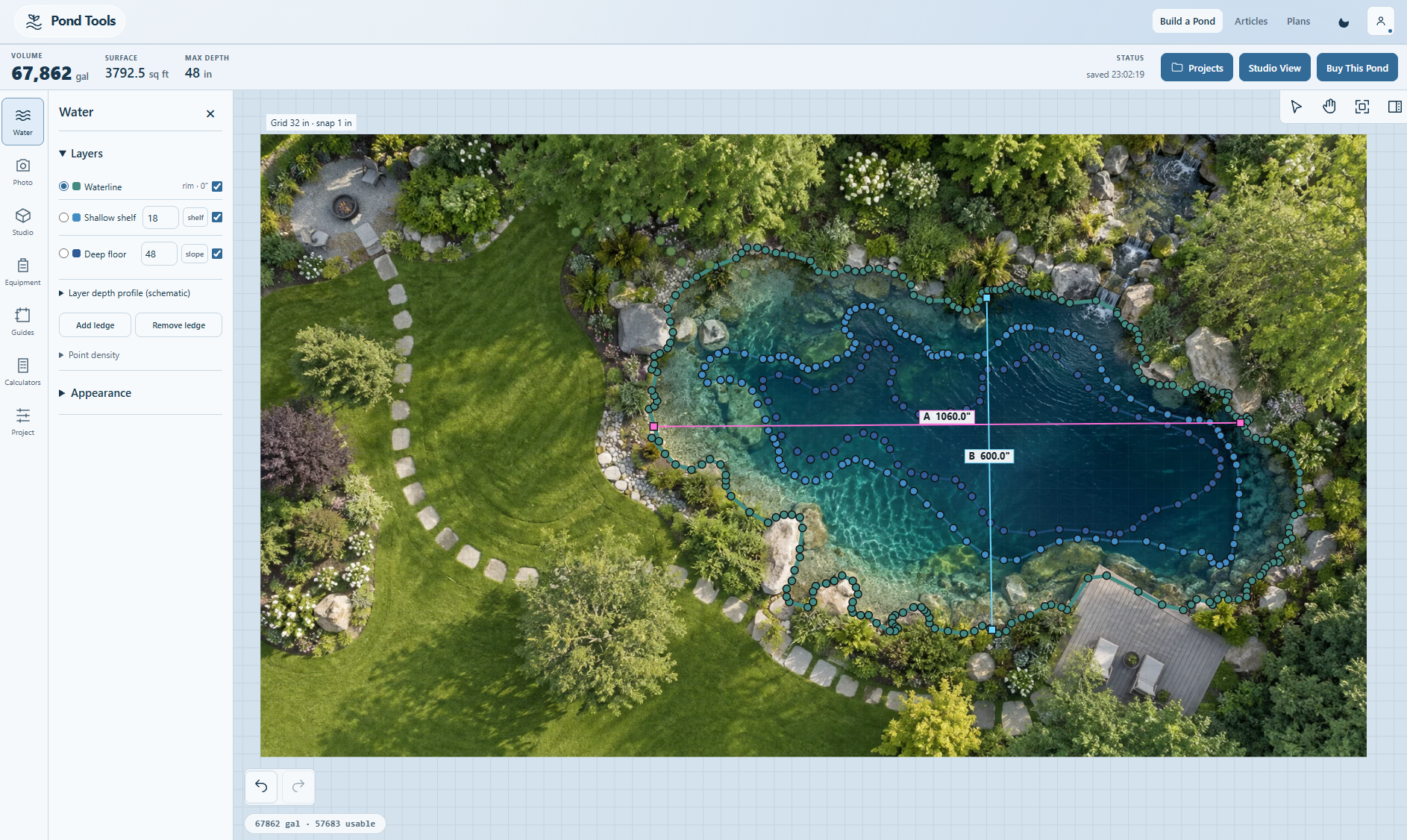
Set shelf depths, then open Studio to see the shape.
AI design, LiDAR, layers, depths and specs. Work with the latest technologies.
Ask PondTools to shape a custom pond or change an existing design. Review the proposed outlines before you apply them, then keep editing in the planner.
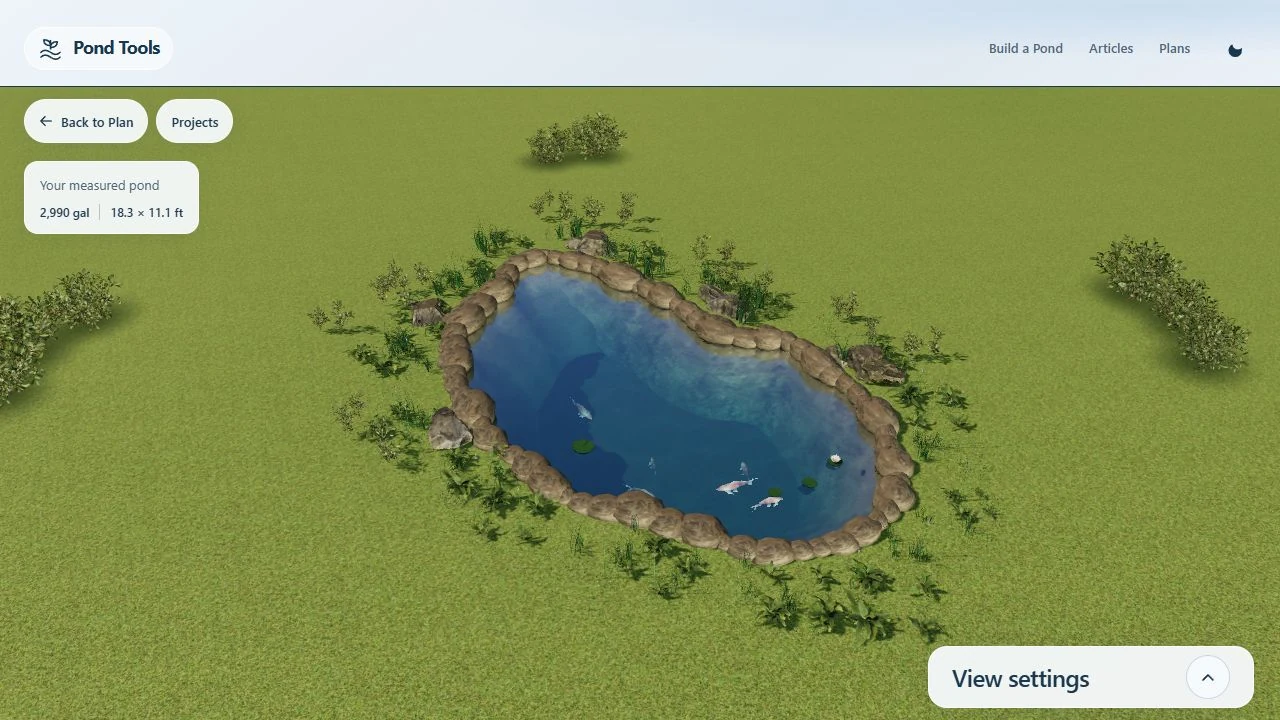 Your plan, in 3D
Walk around your design and see how the pond fits beside the planting and stonework. Planning a pool? Explore our swimming pool design tools.
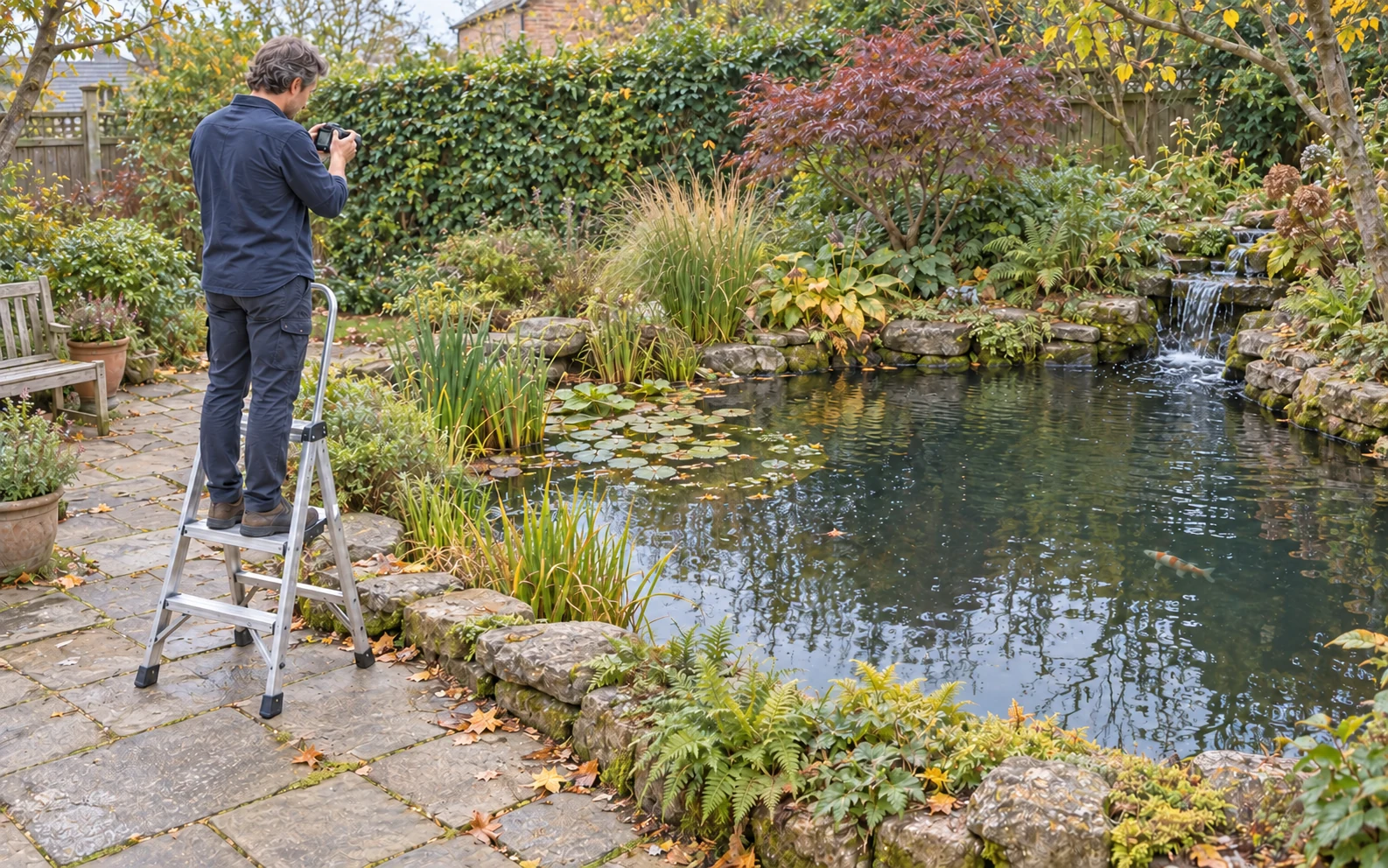
Upload a photo of your pond or yard, then trace your design over it. Add measurements to set the scale and correct the camera angle.
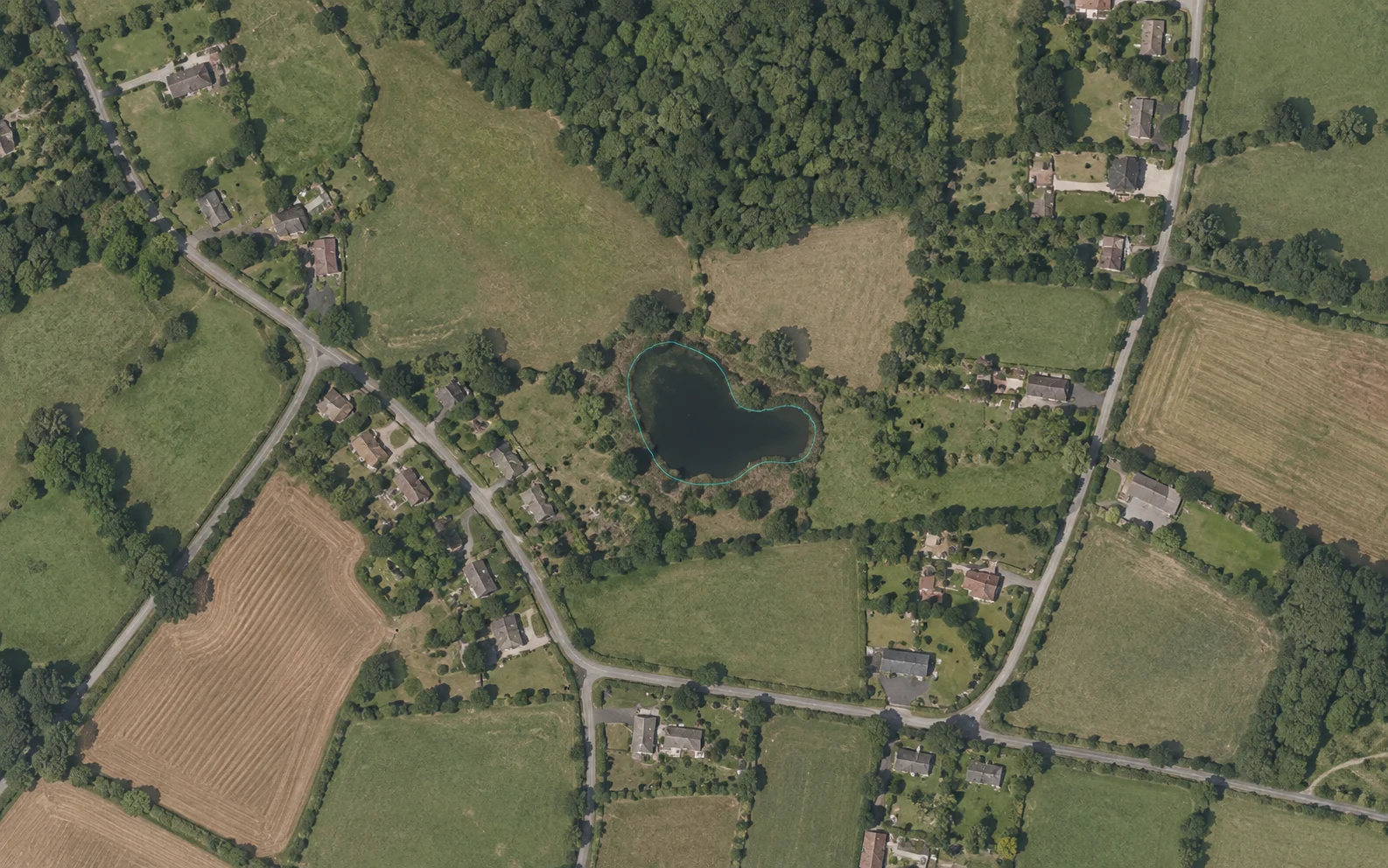
Find your address and draw over satellite imagery. The map provides a scale for your plan.
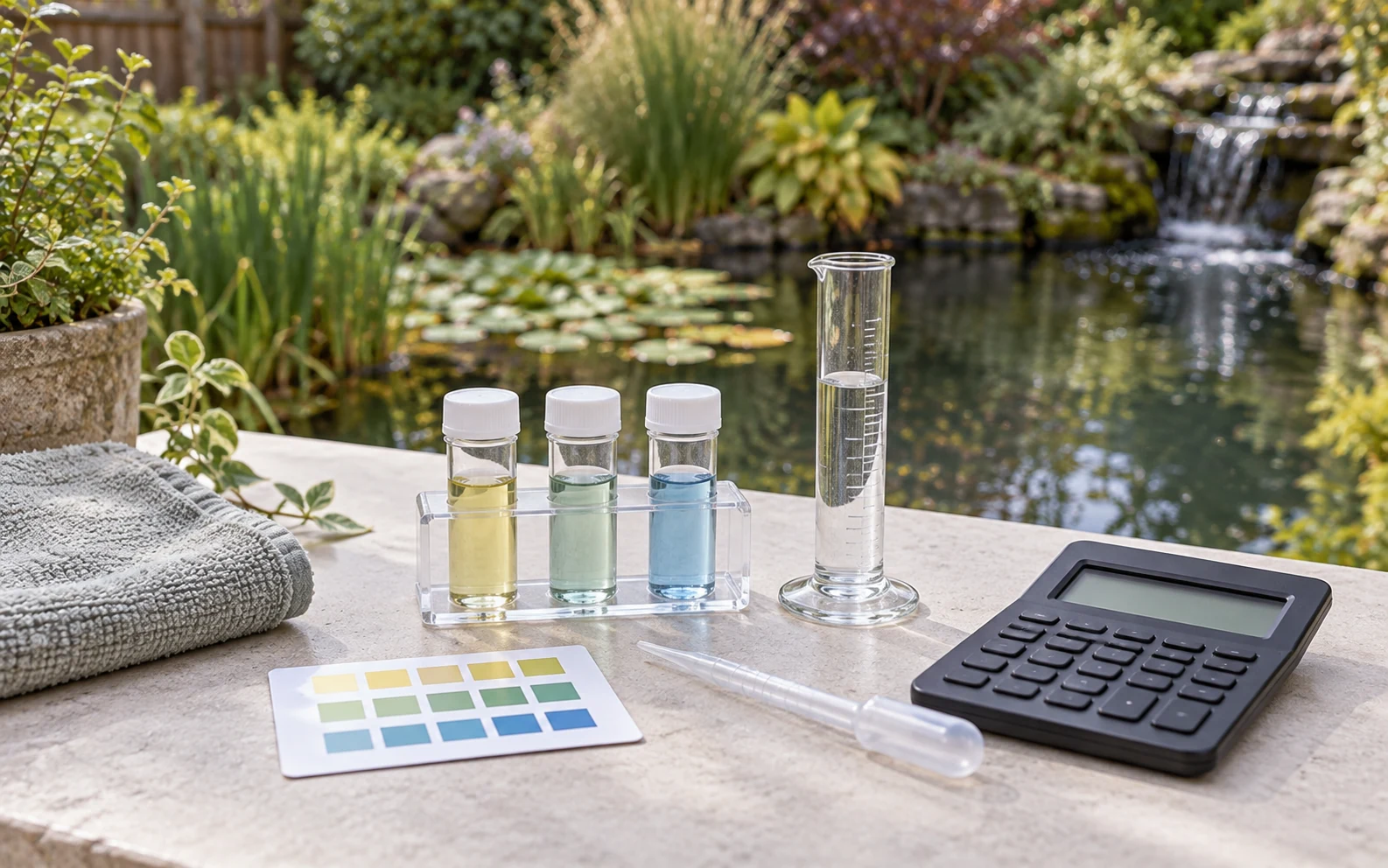
Use your pond’s volume to calculate a salt dose or water change. Check ammonia toxicity against your water test results.
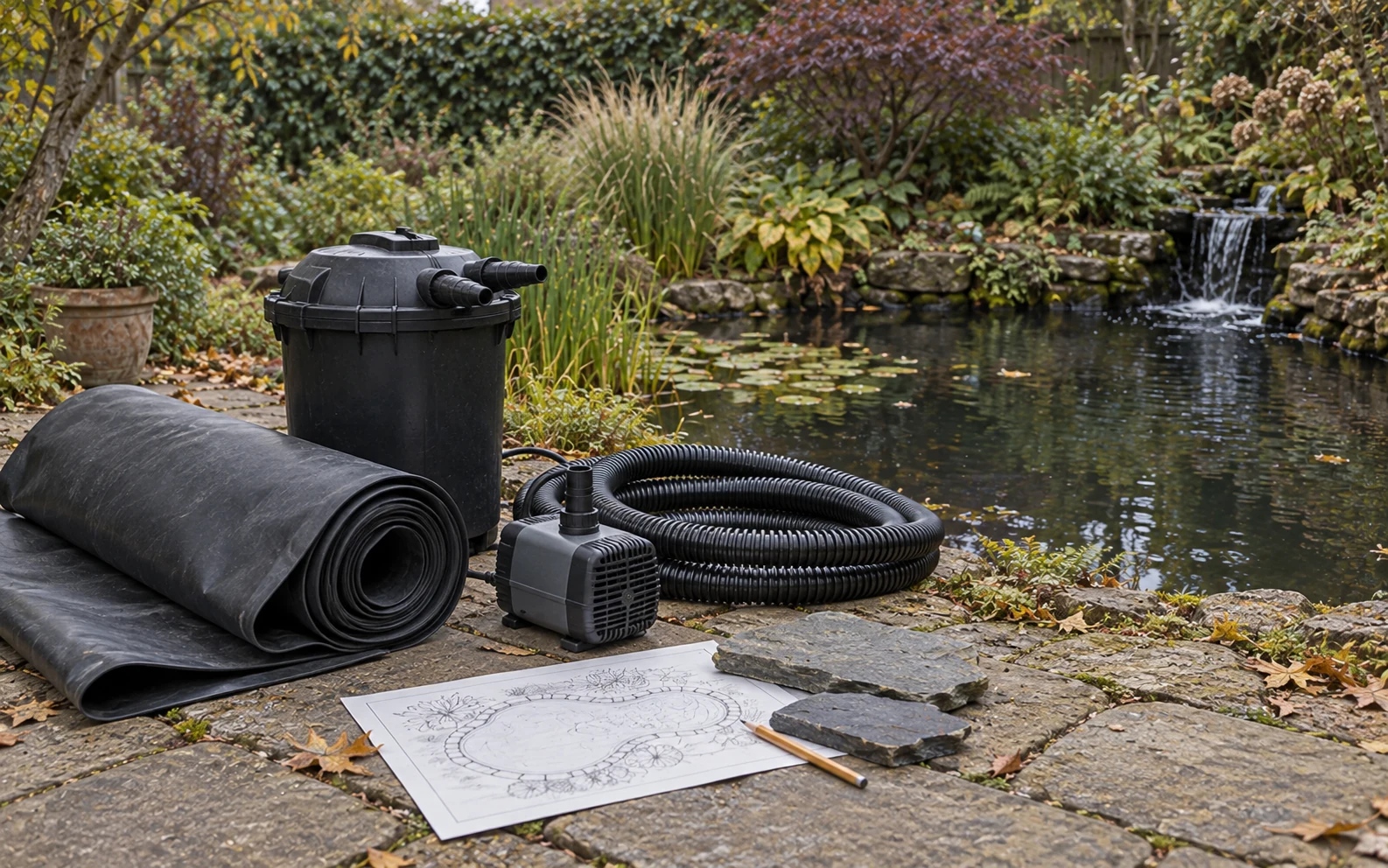
Work out liner size and pump flow from your pond measurements, then use the shopping guide to compare equipment.
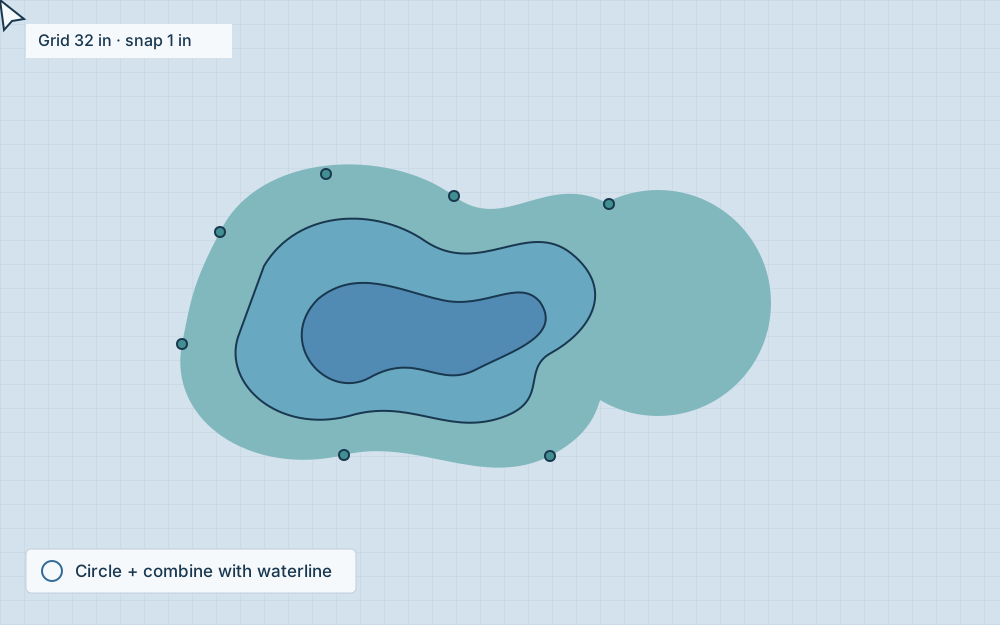 Add a circle. Grow the pond.
Add a circle to widen a corner, or move the outline points to get the shape you want. Undo lets you try another version.
Ready to start?